THE AI CULTURE MAGAZINEVOL. 01 / NO. 02
Click or tap either side of the spread to turn it, or use the ← and → keys.
Simulated creatures, machine music and hardware that learns.
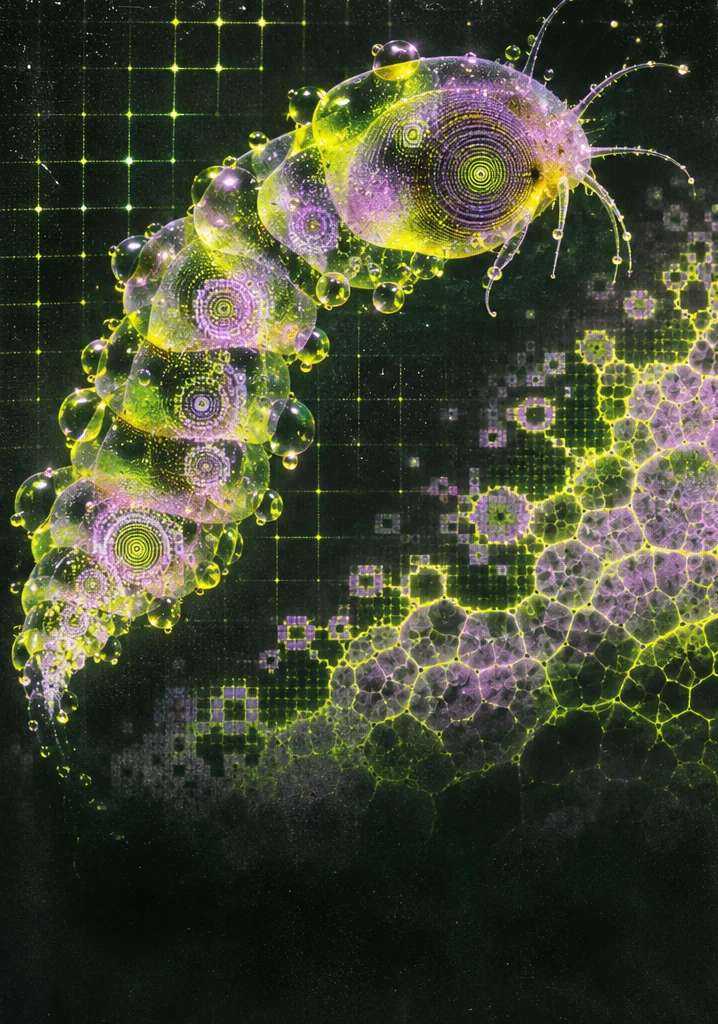
A few lines of local rules can produce something that moves like an animal. Then an image model decides which creatures are worth keeping.
A translucent disc glides diagonally across a green field. It drifts into an irregular fringe, keeps moving, and reassembles itself. The motion looks animated by hand until you see the rule that made it. In Bert Wang-Chak Chan’s Lenia, the world is a cellular automaton. Each location holds a smooth numerical state, and it changes in response to a weighted neighborhood. The moving disc survives as a pattern of values shifting across the field.
Lenia’s precursor, Conway’s Game of Life, uses discrete live and dead cells. Lenia’s smoothly varying states and general neighborhood rules permit a wider range of shapes and motions. A glider in either program can look like an object because it persists over time, even though the cells making it up are continually changing.
Compare two recordings that begin with the same outline. One keeps moving after its edge is disturbed. The other dissolves. This is a more interesting comparison than which one looks like a jellyfish. It asks whether the dynamics hold the shape together when something happens to it.
Bert Wang-Chak Chan, Lenia (2019)
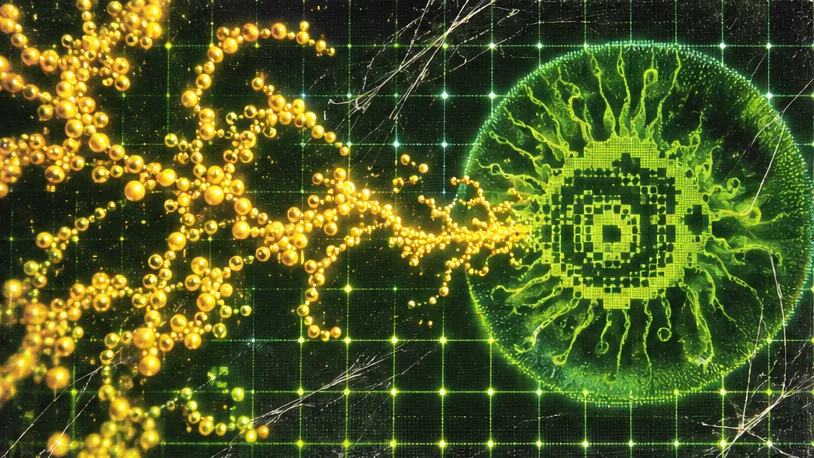
The ASAL researchers used a vision-language foundation model to score videos from artificial-life simulations. One version searches for trajectories that match a description. Another rewards novelty over time. The method can also collect a diverse set of results. In the paper’s demonstrations, it is used across several simulation families, including Lenia, Boids, and Conway-style cellular automata.
This makes the person running the search an editor of its taste. Change the scoring model and you change what it recognizes as similar. A sharp flash or a shift in color can be highly visible while the survival of one faint pattern goes overlooked. A diverse collection in the model’s representation is evidence of diversity under that representation. It still rewards taking the time to watch what was selected.
Open two recordings from the paper’s gallery side by side. One interesting question is how long you need to watch before you spot a change that could alter what happens next. A static lineup of beautiful forms gives you one answer. Their trajectories give you another.
Kumar et al., ASAL project, videos and paper
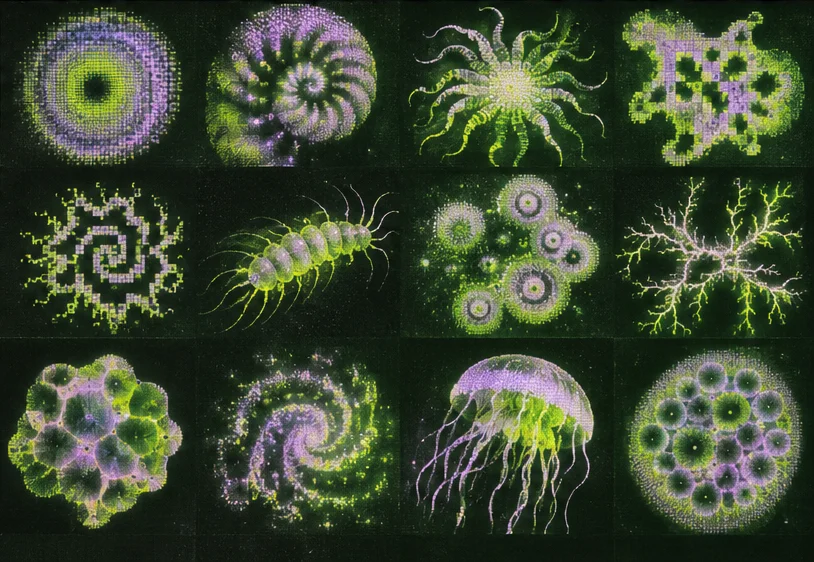
Flow-Lenia changes the simulated dynamics to preserve mass. A pattern can move material around while the total stays fixed under the rule. That makes it possible to ask clearer questions about transport, competition for the available material and why a structure remains localized. The researchers report spatially localized patterns with complex behavior and explore how parameters can vary locally.
Mass in this setting is a quantity in a simulation. The researchers can point to forms that move, interact or persist under the conditions they defined. A reader can ask which features reappear from different starts, whether novelty still comes after long stretches, and what happens when a population meets obstacles it never encountered in the search.
The best viewing session begins with a time limit long enough for the pretty phase to end. Look for breaks, recoveries and repeating motions. Save the rule and the initial state as well as the clip. The image is an encounter. The rule gives you a way to return.
Plantec et al., Flow-Lenia (2025)Flow-Lenia open manuscript
An autoencoder can give a familiar gesture an impossible timbre. A musician still has to find out whether they can play it.
Drag a pick across a piece of corrugated metal. The attack and scrape already give you things to perform. Put that sound into a neural audio system and you can hear an altered instrument follow parts of the gesture. One result might retain the rhythmic chatter and emerge with the grain of a bowed string. Another may flatten the transient into a single swell.
RAVE, from Antoine Caillon and Philippe Esling at IRCAM, is a variational autoencoder for audio. It compresses audio into a stream of latent values and uses a decoder to turn those values back into a waveform. Training combines a representation-learning stage with an adversarial refinement stage. The authors describe real-time synthesis and demonstrate uses including timbre transfer and compression.
A performance makes the architecture audible. Strike a series of dry taps at irregular intervals. The translated sound can reveal which attacks the representation carries through and which textural decisions the decoder supplies. A wavering pitch or a smear between strikes is part of the instrument you are trying to learn.
Caillon and Esling, RAVE paper (2021)IRCAM RAVE audio demonstrations
A latent control may be smooth to turn and still be difficult to name. Its effect can be different depending on the input and the model’s training recordings. Explore a few moves at low volume before deciding which ones belong on a controller. An instrument gets more playable when a performer can predict the shape of a change as they repeat it.
DDSP, introduced at ICLR in 2020, gives the performer a useful comparison. It puts differentiable signal-processing building blocks such as synthesis modules into a learned system. In the research examples, pitch and loudness can be controlled separately, while a model learns how to use familiar signal elements to produce a particular sound.
You can hear the engineering decision in the controls. A named pitch input gives a player an intelligible place to start. A latent dimension invites exploration. A live set might use the dependable control to keep a motif recognizable and reserve a less interpretable control for the moment the texture falls apart.
Engel et al., DDSP, ICLR (2020)
The audio demo can set a ceiling for what you expect. A recording has already passed through a careful selection process. A live instrument has to take repeated input, react promptly, and return to a recognizable state. Round-trip latency includes the audio interface, buffers and processing as well as the model itself. Measure the setup you will actually play.
Record a short take using only sounds you have permission to use. Keep the input and output on separate tracks. Play the same phrase three times, once clean, once far too softly and once with a sharp attack. If the model only works in the middle of that range, you have learned where to set the gain and what happens outside it.
A useful musical record includes which model and settings were used, alongside the source recordings when possible. Later you can listen to the noise that made the notes fail and decide whether it deserves its own part.

IRCAM’s RAVE implementation and real-time toolsDDSP research and listening examples
A wall scatters a little light into a hidden room. When a few photons come back, their arrival times carry a clue.
A sensor faces a wall. The object of interest sits around a corner, outside the direct view. In a time-resolved non-line-of-sight experiment, light goes from a visible surface into a hidden scene, scatters back onto the visible surface and eventually reaches the detector. Most of what returns is weak. The useful evidence comes partly from when the returns arrive.
Matthew O’Toole, David Lindell and Gordon Wetzstein presented a confocal approach in Nature in 2018. Their light-cone transform uses structure in the time-resolved measurements to reconstruct a hidden scene under the model’s assumptions. If light has taken longer to come back, it has traveled a larger total distance. Several places could explain one delay. Measurements associated with different points on the wall help distinguish between them.
An image reconstructed in this way has a very different origin from a direct photograph. Look for the paper’s description of the surface, the object and the recording setup. Those details explain which evidence the algorithm had available and which parts of a rendered shape came from its reconstruction assumptions.
O’Toole et al., Nature (2018)Stanford Computational Imaging Lab project
In a 2026 Nature Communications paper, researchers examined the transient light transport matrix. It records estimated relationships between illumination positions and detected light over time. Their method processes that richer representation for non-line-of-sight imaging tasks, including demonstrating how a hidden scene might be rendered under altered illumination and separating components of light transport.
The practical distinction is between estimating a hidden surface and estimating how light moved through the arrangement. A bright region in a reconstruction can come from an object that scatters strongly or from a path that collects more light. More observations and a model of the light paths can help separate some of those causes in a controlled experiment.
Visual results are easy to overread. The relit image can look like a second exposure, complete with persuasive shading. Its status is a computed view from the measurement and model. When an image travels away from the paper, a caption should preserve that fact.
Transient light transport research, Nature Communications (2026)Open manuscript and demonstration scope
Material, geometry and noise compete with the signal. A small change in the hidden scene can be swamped by everything the relay wall and the rest of the room send back. A laboratory result can be valid and still depend on surfaces, exposure time and what was placed around the corner.
Ask a paper three things. Was the target stationary? What did the authors already know about the geometry? How does the reconstruction change when the evidence gets sparse? These are ordinary questions about a measuring instrument. They keep the most striking demonstration attached to the conditions that made it possible.
The editorial rule here is simple. The full-page illustrations imagine what reflected light might look like if our eyes could notice the different paths at once. The real research figures show the actual measurements and estimated scenes. Think of the illustrations as an invitation to follow the link and study what the experiment made visible.
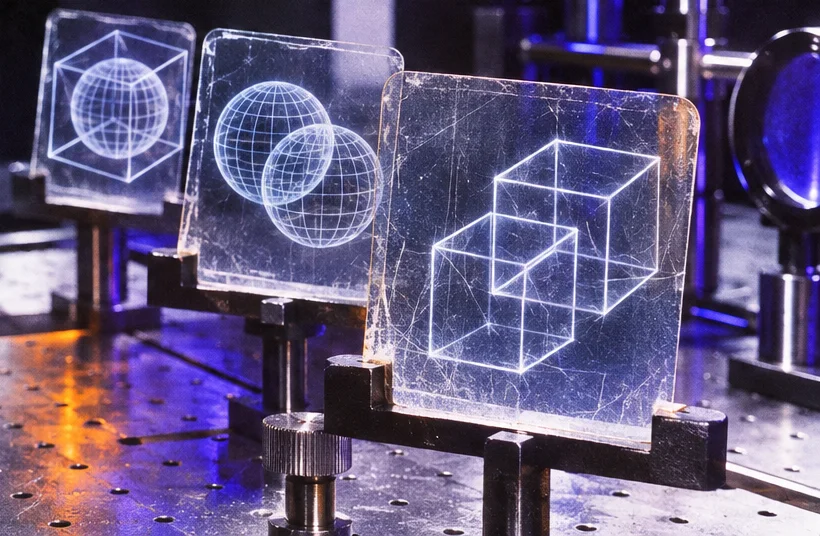
Faccio et al., review of non-line-of-sight imagingStanford research figures and comparisons
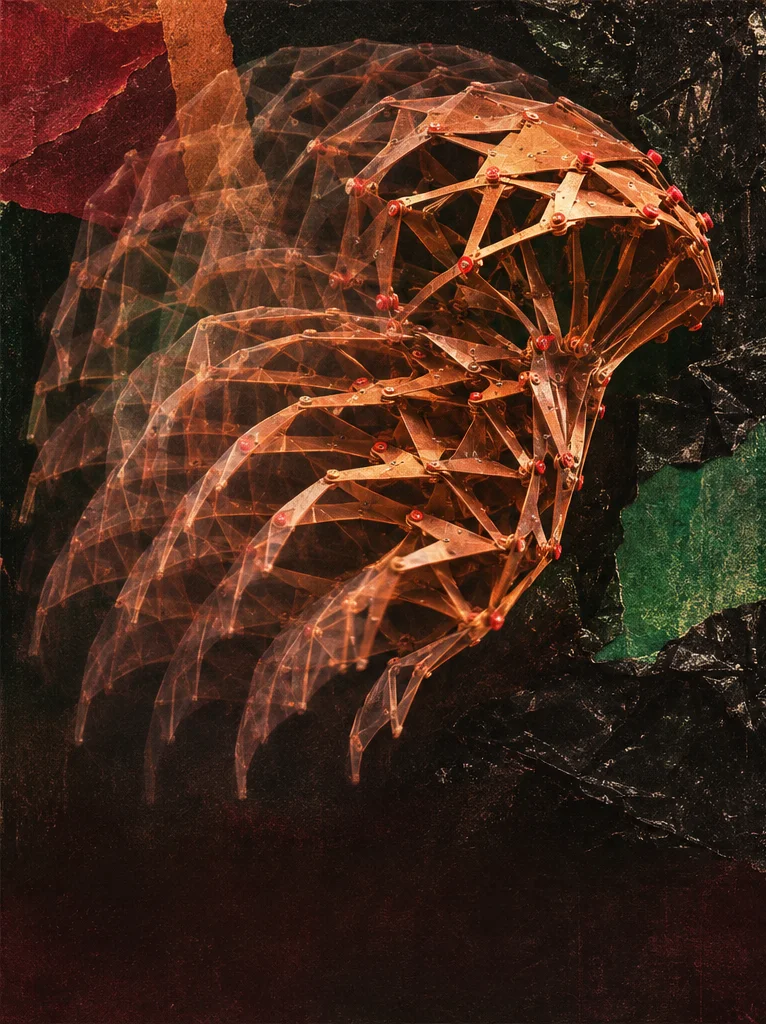
Tune the stiffness of a structure and a push can become a learned response. The hardware holds part of the answer.
Push the corner of a lattice on a workbench. Most of the structure stays close to its starting shape while a few joints move. Replace one spring with a stiffer one and the same push travels differently through the structure. Change the stiffness in many places and the lattice begins to behave like a mapping from applied forces to displacements.
Ryan Lee and colleagues described mechanical neural networks in Science Robotics in 2022. They used architected materials with beams whose stiffness could be tuned. The analogy to a neural network is in the adjustable parameters. In a trained lattice, the set of stiffness values helps determine what the piece does when it is loaded.
A mechanical result becomes easier to read when you separate training from use. Measurements and adjustment can require an external system during training. Later, some operation can happen simply by applying a force to the configured structure. Both stages count if you are comparing the apparatus with a conventional system. The division still matters to a designer who wants hardware to handle part of a behavior.
Lee, Mulder and Hopkins, Science Robotics (2022)
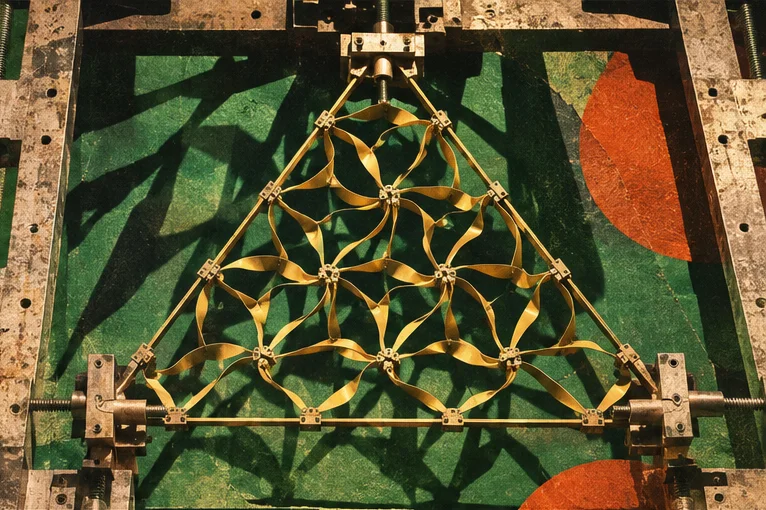
In a 2026 Nature Physics study, Yao Du and colleagues built metamaterials that learn complex shape changes from demonstrations. The prototype’s hinge units include sensing, microcontrollers and actuation. Each unit can change how it responds by adjusting its effective stiffness and interactions within the material. The study shows how those local updates can help train a distributed shape response.
That is a computer spread along a physical structure. The shape is a collective outcome, and what each unit can measure is local. The electronics matter, as do the mechanical connections that carry the effect to the next hinge. Some of what would have been a software model of the structure is now the structure’s own motion.
The paper describes systems that can learn successive responses and examples involving more than one stable configuration. The reported behavior is a result of the experiments and simulations at their stated scale. If a company proposes a much bigger device, ask whether its motors, sensors and communication still work with the same delays and force limits.
Du et al., Nature Physics (2026)AMOLF open research record
People are used to calling a handheld controller programmable because a processor inside it executes instructions. In a mechanical network, the material configuration can also carry a part of the program. That is worth considering for a soft machine or a fixture that must make a reliable motion under a limited set of forces.
Real hinges have friction, backlash and wear. A response demonstrated once in a lab might drift after hundreds of cycles. A trained structure should be tested with loads and speeds outside the examples it saw. Then measure what happens after losing power, including whether the last useful configuration persists or whether the system relaxes.
One way to read this work is to follow the force before you follow the computer. Start at the finger that pushes, track the joints that bend and ask which choices still happen when you take a microcontroller out of the picture. The resulting diagram tells you exactly where the intelligence has been distributed.
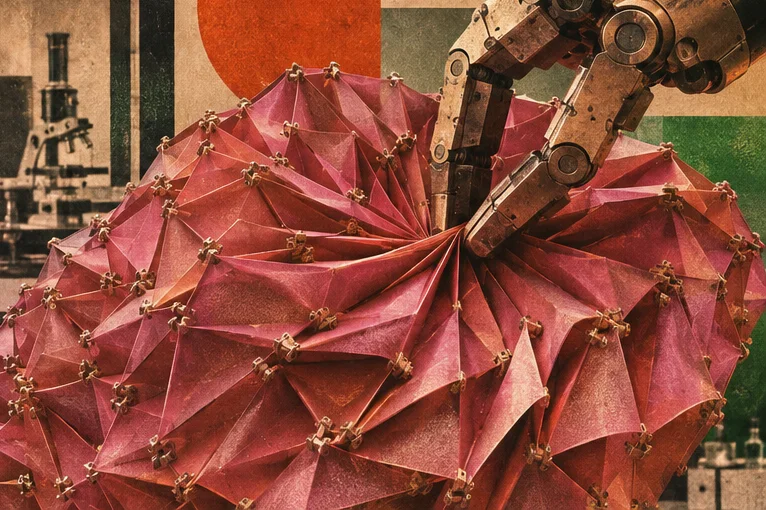
Physical training of mechanical networks, Nature Communications (2024)University of Amsterdam’s explanation of the hinge prototype
A wheel spins under a lamp. Clicks travel between two whales. A rolled piece of carbonized papyrus keeps the shape of its vanished library. These are three different ways of leaving evidence. A timestamp, a pause or a faint mark in an X-ray can be as important as the thing a screen eventually shows.
The seven reports that follow ask how each instrument changes what a researcher can know. Watch for what the hardware measures directly, which parts a model infers, and what the researchers can check independently. You can follow the primary papers, technical notes and original project reports from the relevant pages.
The scenes in the collages are invented. The apparatus in the papers has a smaller range and usually a much more detailed account of its mistakes. Read both views of the instrument. One lets you imagine how it might feel to use. The other tells you what it can do.

A bicycle wheel becomes a sketch made of timestamps. Ask the sensor what color it was, and you start to understand what the sketch cost.
Spin a bicycle wheel under a workshop lamp. A short exposure might freeze the spokes, while a long exposure turns them into a disc. An event camera can report a different thing altogether. Each pixel keeps track of changes to the brightness reaching it. Cross its contrast threshold and the sensor emits an event with a location, time and direction of change.
In work published in 2008, Patrick Lichtsteiner, Christoph Posch and Tobi Delbruck described an asynchronous sensor of this kind. Its pixels responded to relative intensity changes independently. The prototype was small by the standards of a frame camera. Its value lay in the timing of its measurements and the range of light levels across which it could respond.
If a bright spoke swings past a dark patch, the two edges can cause opposite changes at successive moments. Join those events in a time plot and you see a trace of rotation. Stop the wheel and much of the stream goes quiet. The black background in an event visualization can mean that nothing crossed the reporting threshold. The workshop might still be full of light.
Lichtsteiner et al., IEEE Journal of Solid-State Circuits (2008)Gallego et al., event-based vision survey
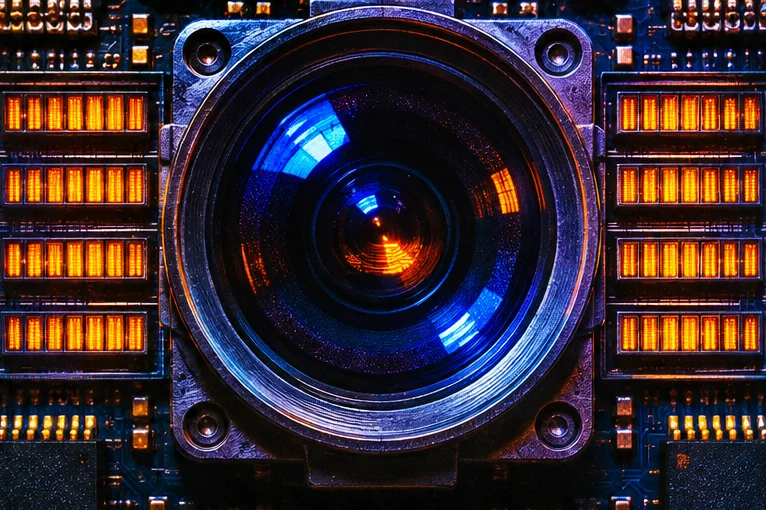
A conventional camera gives a recognition model an entire image on each frame. A stream of dark-to-bright and bright-to-dark changes gives it a kind of conditional sketch. To detect an object, software may accumulate events over some interval, merge them with a conventional image, or carry an internal representation forward as individual events arrive. A longer window can recover more shape and delay a decision at the same time.
Daniel Gehrig and Davide Scaramuzza reported a hybrid system in Nature in 2024. It combined frames with event data to update detections between frames. This put the fast sensor to work where rapid changes offered extra evidence and kept conventional images available for recognition.
A demonstration can feel fast because it shows a scene that benefits from fast updates. A good benchmark declares the frame rate of the comparison, what time counts as the moment the change occurred, and whether the person judging the result sees the missed detections as well as the speediest ones. Sensor response and a useful end-to-end decision deserve separate clocks.
Gehrig and Scaramuzza, Nature (2024)
A room with fluorescent flicker, textured walls and a moving camera can generate streams of events with very little to do with the object of interest. Sparse measurements are a property of the sensor and the scene together. Light sources, movement and the selected threshold influence how much the computer is asked to process.
A 2026 preprint from Roberto Pellerito and colleagues investigates converting raw events into a learned stream of more informative discrete events. The model learns local patterns and signals when its assigned code changes. Compression here is a decision about which motion and contrast patterns a later task needs to recognize.
The helpful experiment is to count what gets lost. Compare a steady view, a flickering room and a rapid moving object. Look at throughput and detection together. A method that throws away background flicker can earn its keep. A method that throws away the first faint edge of a moving object may give you a visually clean stream and a later warning.
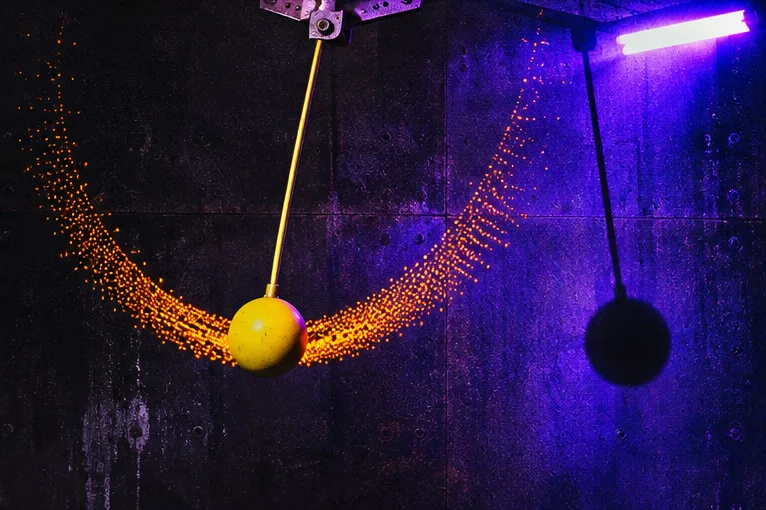
Pellerito et al., Neural Events (2026 preprint)Motion-aware event suppression, RSS (2026)

One model predicts what a molecule might smell like. Another tries to recognize a passing plume. They work with completely different evidence.
Imagine two unlabeled vials on a bench. A chemist knows the molecular structure of the compound in each. Someone opening the first vial might say it smells floral. A second person might choose a more specific word. The problem is to predict a group of descriptions using the structure, then decide whether the prediction is useful given the variation between people.
In Science in 2023, Brian Lee, Emily Mayhew and colleagues reported a Principal Odor Map learned with a graph neural network. A molecule can be represented as a graph of atoms and bonds. Descriptions supplied by people help organize the model’s internal representation so that certain perceptually related odorants have nearby positions.
The researchers began prospective validation with 400 odorants. They excluded 77 from the final performance analysis for reasons including low intensity, redundancy and contamination concerns. Across the remaining 323, the model’s profile was closer to the average panel profile than the median panelist’s profile for 53 percent of the molecules. The numbers describe agreement with a trained panel under that procedure. The model inferred from molecular structure while the people had samples to smell.
Lee, Mayhew et al., Science (2023), prospective validation
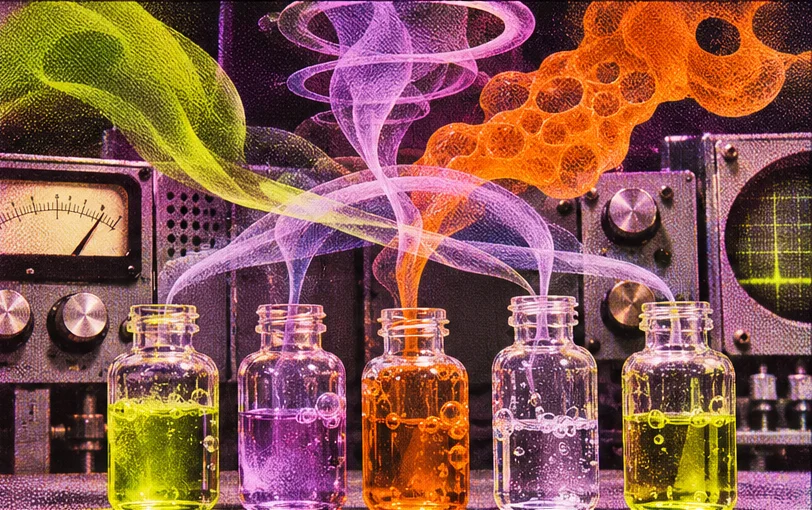
An electronic nose starts with a different problem. It has a stream of physical measurements from sensors exposed to air. Each sensor can respond to several compounds, and the full array produces a pattern. Temperature, humidity and a changing plume can affect the response. The instrument needs a way to represent what it measured and judge whether it has encountered a familiar mixture.
In a 2020 Nature Machine Intelligence paper, Nabil Imam and Thomas Cleland implemented an olfactory-bulb-inspired algorithm on Intel’s Loihi neuromorphic platform. The study examines rapid learning and recognition with noisy gas-sensor signals. Its examples help explain why the temporal pattern of sensor activity matters alongside the size of the response.
Think of a passing odor as a train of uneven arrivals. Some measurements are weak and one may be interrupted. If the system only remembers the neat example from its original training, that noise can defeat it. Ask whether recognized samples were gathered on a different day, from a different location or at a different concentration, and how uncertain signals were handled.
Imam and Cleland, Nature Machine Intelligence (2020)
A 2026 study in Nature Communications describes an artificial olfactory system with sensory adaptation. The authors use an artificial receptor with memory to examine how repeated stimuli can alter later responses. A device that adapts to persistence can reserve attention for a change. The same property makes it important to ask how a sustained exposure will be represented over time.
Two demonstrations can look equally convincing while solving different tasks. Predicting a person’s odor descriptors requires labels for perception. Classifying a sensor response requires calibrated physical observations. Detecting a new plume requires a definition of background and change. Before comparing accuracy, identify which job the instrument was given.
Keep an ordinary fragrance journal for a day and the distinction becomes tangible. Record a smell upon entering a familiar kitchen, then record it again after a minute. A new arrival and a persistent trace tell different stories about the room. An electronic system will inherit whichever distinction its designers teach it to make.
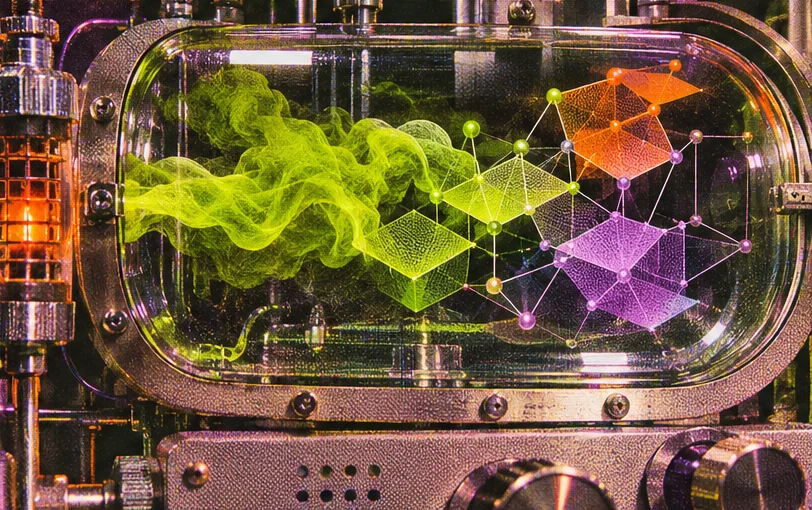
Artificial olfactory adaptation, Nature Communications (2026)Principal Odor Map research overview
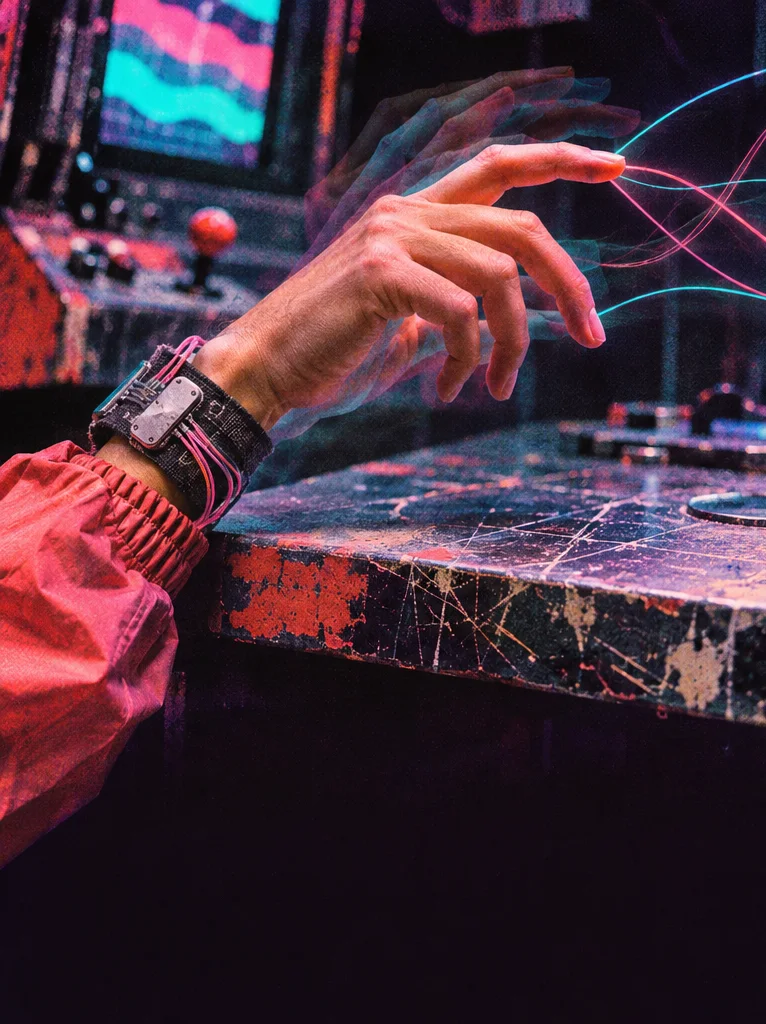
A wearable can recover a gesture from electrical activity at the skin. A good interface still has to know when the wearer meant to act.
The edge of a person’s thumb moves a fraction. A camera might miss it, particularly if the hand is behind a desk. Surface electromyography records electrical signals on the skin associated with muscle activity. A band whose electrodes make reliable contact can collect a changing pattern even when there is very little visible movement.
In a Nature study published in 2025, researchers at Meta’s Reality Labs trained models for different input tasks using signals recorded at the wrist. They tested continuous cursor-like control, discrete gestures and handwriting. In prompted text-entry trials they reported 20.9 words per minute with the handwriting decoder. That figure comes from an experiment with its own prompts, scoring and equipment.
The result makes a less obvious point about human-computer interaction. Where the body signals a gesture and where a sensor measures it can differ. The user may act at the fingers while the device records at the wrist. Software has to learn which signal changes go with the intended action and which belong to everything else the arm is doing.
CTRL-labs at Reality Labs, Nature (2025)
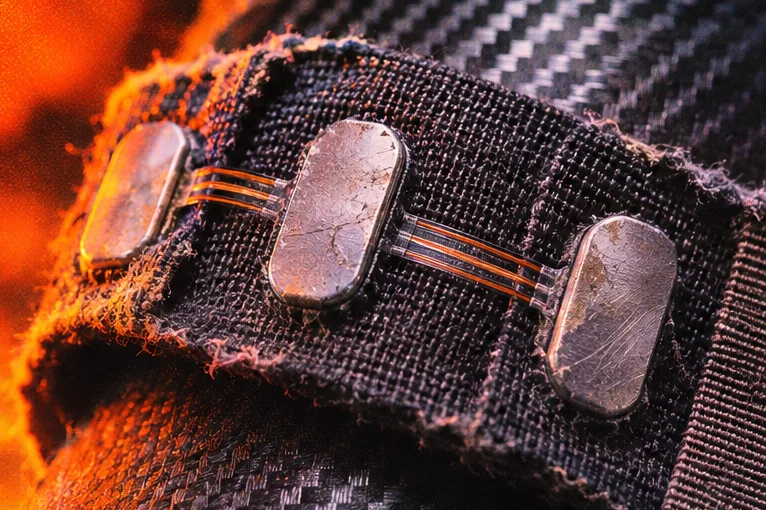
A related project moved the sensors elsewhere. In 2018, Arnav Kapur and colleagues at the MIT Media Lab presented AlterEgo, a wearable interface that used neuromuscular signals from the jaw and face during deliberate silent articulation. Its research demonstration explored communication without audible speech. The input was an action a participant practiced while wearing the device.
Put the concepts side by side. A wristband reading a pinch and an interface reading silent articulation rely on signals associated with voluntary motor activity. Neither example requires a camera to see the mouth or hand. The harder work is translating faint signals from particular movements into stable commands and building an interaction that gives the wearer useful feedback.
A user whose signal pattern looks different may need calibration, another band fit or a different gesture. Scope a result by the supported vocabulary, the people included in evaluation and the movements tested. A small set of dependable commands can be genuinely useful when a full free-form interface is still a research problem.
Kapur, Kapur and Maes, AlterEgo, ACM IUI (2018)Wrist-based interface study and task methods
A wearable interface should spend at least as much time observing the user not trying to click as it does scoring deliberate clicks. Consider the movements involved in buttoning a coat, carrying a glass or gripping the handle on a bus. The machine needs reliable ways to distinguish a command from the rest of a person’s day.
Set up the comparison with two costs. A missed gesture means repeating an action. A false trigger can send a message or make a change before the intended moment. Some controls should expose a preview or a fast undo. Some should ask for a deliberate second action. Those decisions belong to the interface even if the decoder’s benchmark is excellent.
There is a similarly practical privacy question. A recognized gesture and a continuous record of wrist signals contain different amounts of information. Evaluate the system with a clear account of where raw data goes, when it is stored and whether the user can turn the listener off. A quiet interface can be most useful when the wearer has the clearest idea of when it is listening.
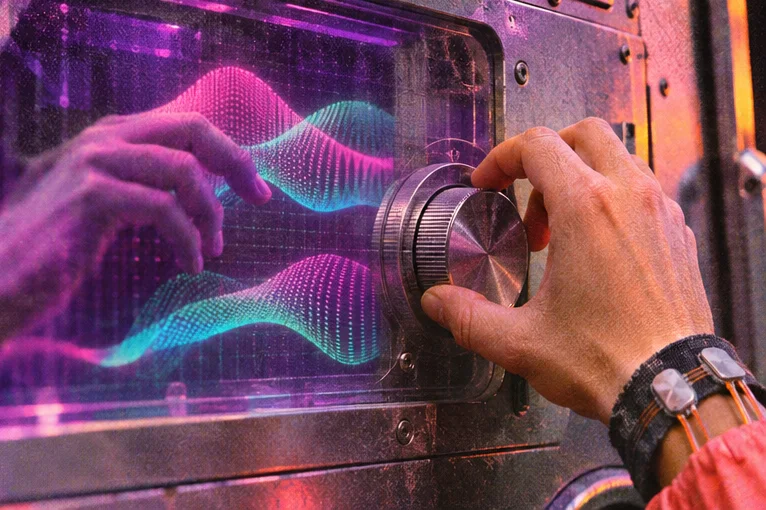
Nature paper, training and closed-loop evaluation

A few tenths of a second can change how a sperm whale coda fits into an exchange. Describing the pattern is a step toward a much harder question.
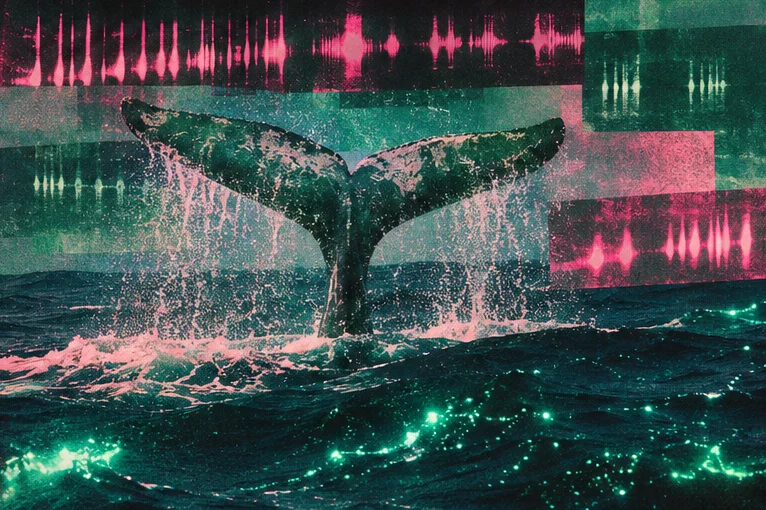
A sperm whale coda comes through as a short sequence of clicks. The clicks are only part of the record. Measure the gaps and compare those gaps across many recordings, then study what changes when another whale answers. Tiny changes in timing can carry information about the structure of the exchange.
In 2024, Pratyusha Sharma and colleagues reported a system of variation in sperm whale codas using recordings from the Eastern Caribbean. They describe rhythm and tempo along with more context-dependent changes. Rubato covers gradual timing adjustment, and ornamentation refers to cases with an extra click. Combining several kinds of variation made the observed repertoire richer than a list of click counts would suggest.
The authors frame the result as a phonetic alphabet. The name gives a useful way to talk about components that can be combined. A phonetic description and a translation answer different questions. To learn which parts of an exchange matter to a whale, you need observations that connect the sounds with what happened before and afterward.
Sharma et al., Nature Communications (2024)

A 2026 study of coda sequences between sperm whale pairs from Dominica asks what the preceding clicks from one whale tell you about the next coda from the other. The researchers report predictive relationships over sequences of up to ten earlier codas in their data. Features included coda duration and time intervals between clicks.
A prediction can demonstrate structure in a recorded exchange without explaining what the sound means. Both animals could be affected by a third event. A characteristic of one social group could be part of the signal. If training and evaluation use the same individuals or recordings from the same conditions, it can also be easy to mistake familiar acoustics for a general rule.
A useful follow-up keeps the clocks and identities straight. How certain is it which whale called? Are multiple recordings from the same bout counted as independent evidence? How well does the result travel to another group, another hydrophone or a different day? These questions concern how much a prediction can explain.
Assayag et al., Bioacoustics (2026)
The Earth Species Project’s NatureLM-audio work tackles a different problem. It uses an audio-language model to help address tasks such as classifying species and describing recordings, including evaluation on its BEANS-Zero benchmark. A detector that can bring unusual clips to a researcher’s attention could make an audio archive much easier to explore.
The vocabulary of a caption is supplied by the system and its training data. A convincing phrase about a call should be accompanied by the label definitions and the recording context. Consider the contrast between a clip tagged as containing an animal and a scientist’s claim about the reason that animal made the sound. The second claim needs observations the captioner may never see.
I would start listening with two playback passes. First listen with no display. Then open a timing plot and listen again. The very same clicks start to sound grouped differently once you see the spacings. That shift in attention is already worth the experiment. It also makes the next step clear: test whether the grouping predicts anything a whale actually does.
Robinson et al., NatureLM-audioProject CETI research and data
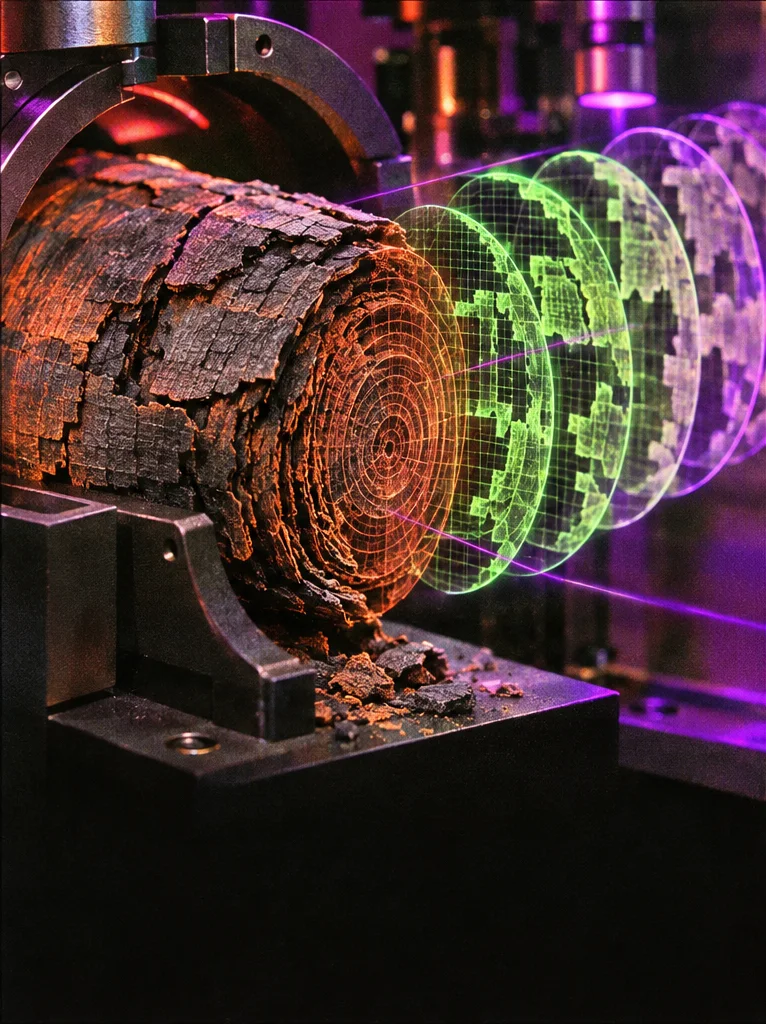
A student sees a letter in a carbonized roll. Behind that letter is a chain of judgments about X-rays, geometry, ink and Greek.
From the outside, a burned papyrus roll can look like a stick that would collapse if you squeezed it. The instrument used on the Herculaneum scrolls records a volume of the object with X-rays. In a good cross-section, compressed layers of the sheet are distinguishable. The task is to follow the correct layer through the roll, which may have been crushed, torn or pressed into its neighbors.
Virtual unwrapping applies a geometry pipeline to that volume. Researchers locate a sheet, represent its surface and flatten part of it into a view a reader can use. A historical precedent is the En-Gedi scroll, digitally unwrapped in a 2016 Science Advances study. Different materials and kinds of ink create different contrast, so the procedure that succeeds for one manuscript may need substantial changes for another.
Consider winding a thin strip around a pencil and then crushing the pencil into an oval. Part of the strip will touch itself. A model tracing the wrong face can produce something that looks continuous across that contact while cutting between two pages. The output should let archaeologists go back through the geometry and ask which layer supplied a given letter.
Seales et al., Science Advances (2016)Vesuvius Challenge, unwrapping and ink detection
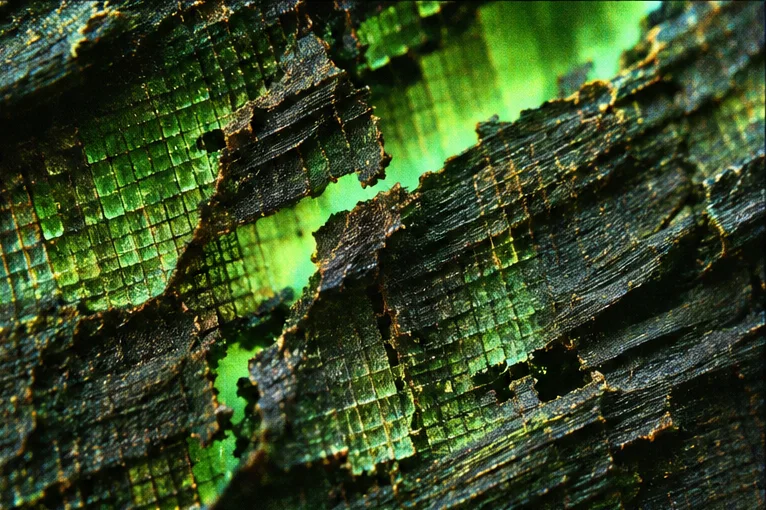
In parts of the Herculaneum collection, carbon-rich ink is difficult to distinguish from carbonized papyrus. An ink detector can look for subtle differences in the local scan data. Train it on areas where people have identified ink, predict on a new area, and then check whether the emerging marks line up with the sheet and form plausible character strokes.
The Vesuvius Challenge’s 2023 grand prize announcement documents the recovery of text from an intact roll using machine learning and virtual unwrapping. The competition made the problem legible to people with very different skills. One participant could improve the surface. Another could improve the ink prediction. Papyrologists could then inspect the output and ask for a better rendering of a particular passage.
A good ink map makes uncertainty visible. A faint stroke near a crack is a different proposition from a continuous line of securely placed characters. Save the scan, surface and ink prediction as separate things. A human who sees the context can return to the measured volume when a reading would change a name or make a sentence unusually convenient.
Vesuvius Challenge, 2023 Grand Prize resultsBodleian Libraries, inside PHerc. 172 (2025)
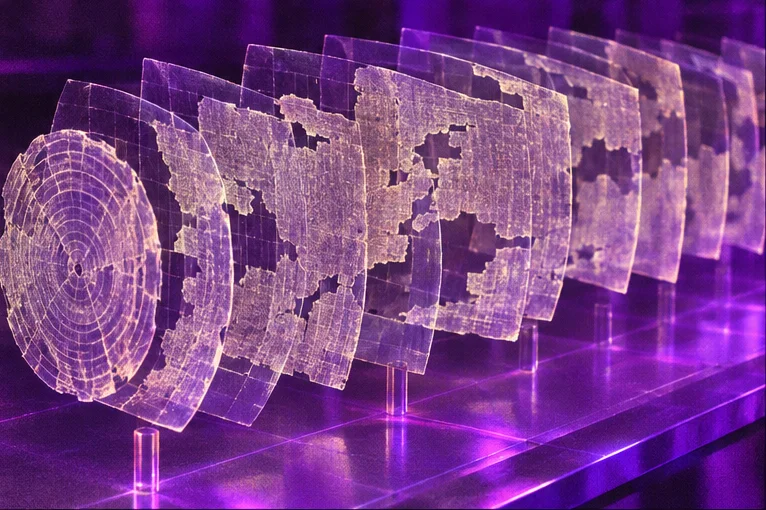
A 2026 preprint by Giorgio Angelotti and colleagues reports the complete digital unwrapping and reading of the preserved writing surface of PHerc. 1667, a remnant of an earlier attempt at physical opening. The manuscript is a careful example of how conservation, synchrotron scanning, geometry and scholarly interpretation can form one workflow.
The word preserved matters. A recovered surface still has an edge, tears and damaged parts. If a passage survived only in part, virtual unwrapping can make the surviving evidence accessible. The transcription can distinguish a visible character from a probable reconstruction and leave space for a word that remains unsettled.
The endangered material gives this machine-learning result an unusual public test. The point of a better model is a reading that another scholar can investigate. A new line of Greek should lead to its place in the roll, its image, and the decisions a reader made about it. An otherwise beautiful result is much less useful if it breaks that chain.
Angelotti et al., PHerc. 1667 (2026 preprint)Vesuvius Challenge technical report and workflow
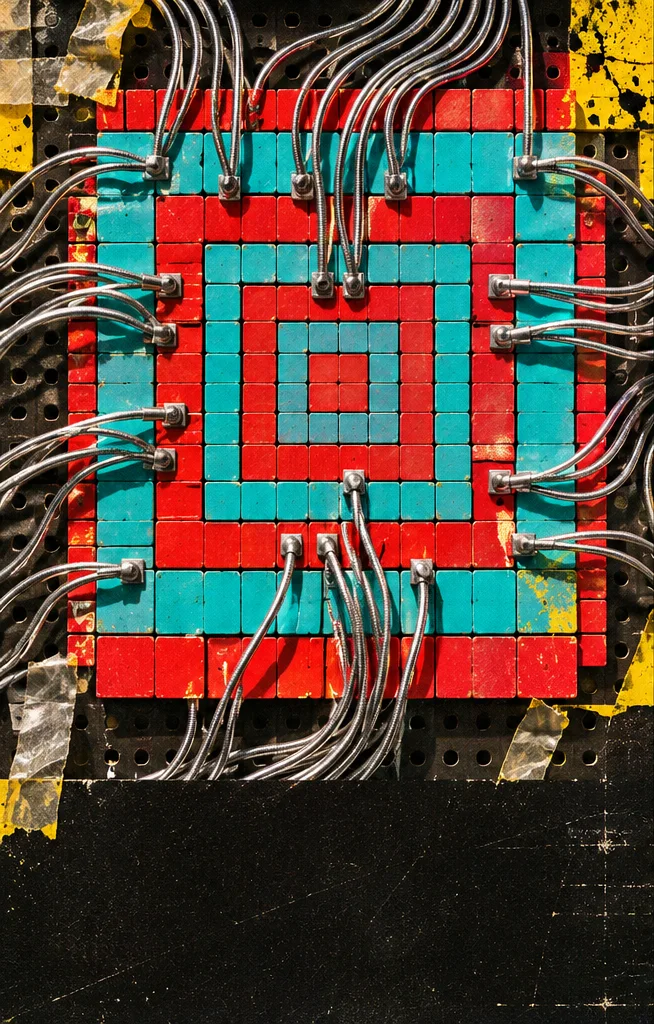
An AI can propose thousands of strange little programs. What makes the result worth publishing is the test it has to survive.
Suppose you have a good way to judge a result and a terrible way to think of candidates. One approach is to start from a working program and let a language model propose changes. An evaluator runs the candidates against a specification. Good results feed the next round. The model’s job is to keep supplying plausible programs with enough variety to make a search worthwhile.
FunSearch, reported in Nature by Bernardino Romera-Paredes and colleagues, used this pattern to find new constructions for the cap set problem and explore bin packing heuristics. A cap set has a mathematical constraint on which triples it can contain. A generated program can propose a construction. Its output then checks against the stated constraint and can be compared for size.
The advantage is that a useful answer comes with a program you can inspect. There is a difference between a large set found by chance and a compact rule that produces good examples across several sizes. The second can lead to more mathematics after the search has finished, because people can ask which parts of the rule do the work.
Romera-Paredes et al., FunSearch, Nature (2024)
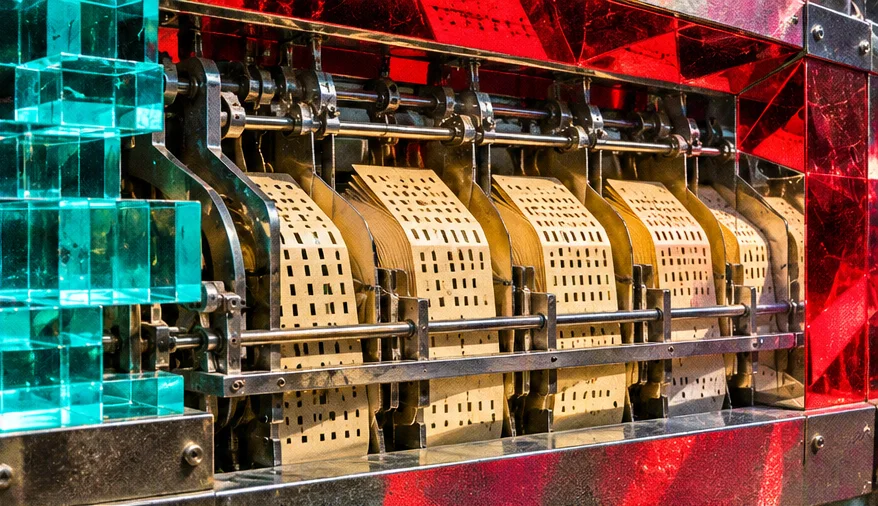
Google DeepMind’s AlphaEvolve applies evolutionary program search with evaluators at a larger scale. One result reported in 2025 is an algorithm for multiplying two four-by-four complex matrices using 48 scalar multiplications. The finding is specific to the matrix size, the arithmetic setting and the type of operation being counted.
Think of inventing new intermediate expressions whose products can be added and subtracted to recover the standard result. The search can try arrangements a person would have little reason to write down by hand. Once found, the identity needs to be verified. Count the operations and check that the coefficients reproduce the intended outputs for general inputs. Timing a program on one laptop is a separate measurement.
A useful distinction in the paper is between a verified mathematical identity and an efficiency claim about deployed code. A lower count of one operation can come with changes to memory traffic or to the number of other operations. The claim belongs beside its evaluator so a reader can see what improved.
AlphaEvolve technical paper (2025)DeepMind’s matrix multiplication result
The hardest work often starts before the model writes a candidate. Someone has to choose the input range, define correctness and decide which resource is scarce. If the test only grades easy cases, a candidate can improve its score while becoming less useful on the cases that motivated the project.
For a mathematical construction, an independent verifier or proof may settle correctness. For an engineering optimization, further measurements often matter. Use cases the search never sees. Record the cost of running the search. Keep the version of the evaluator with the result so another person can reproduce the conditions under which it won.
One of DeepMind’s 2026 reports describes applications of AlphaEvolve in several scientific areas. Each application builds a different way to tell the loop what counts as progress. The general idea is less mystical and more interesting than a universal discovery machine. You can ask software to try a large number of ideas and give each idea a rigorous audition. What deserves applause depends on the test you put it through.
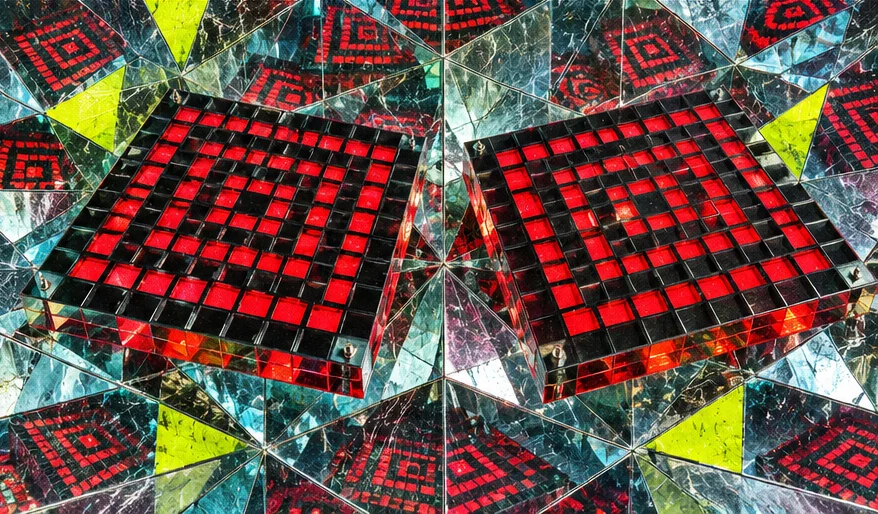
DeepMind, AlphaEvolve applications (2026)Mathematical exploration with AlphaEvolve
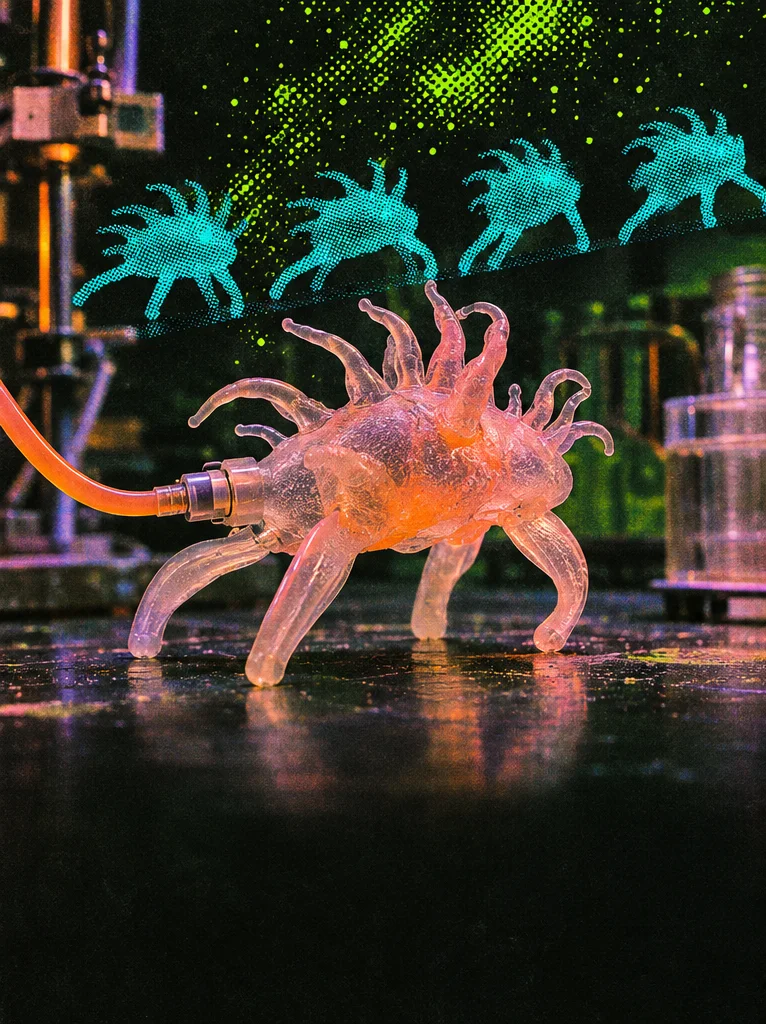
The first useful gait can look like a mistake. A good simulator leaves room to find out why the real body behaves differently.
In a 2023 study in PNAS, David Matthews and colleagues began with a randomly generated robot body in simulation. Their design process adjusted the structure to improve locomotion. The optimized body was then manufactured as a soft robot and demonstrated physical movement. The resulting shapes can look odd because the computer judged each iteration on the stated task, with no requirement that a walking machine look like one an illustrator would recognize.
That setting is a useful counterpart to training a controller for a fixed body. A stiffer part here can pass force into a flexible region over there. Change the outline and you change how a pressure cycle shifts weight along the ground. Details that a human might dismiss as awkward can be precisely the features that make the movement work.
The word seconds in the research’s description refers to the automated design search under the tested conditions. Fabrication, the preparation of the setup and the physical trial are additional steps. Keeping those clocks separate helps a reader understand which part of the process became fast.
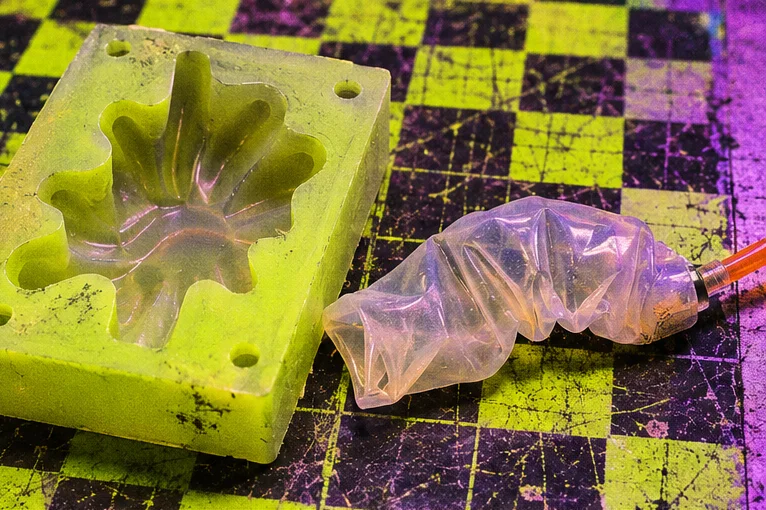
A simulation has to guess what happens when a foot meets a surface. With a soft robot that moment can depend on material properties, deformation, pressure and contact. The exact terms may be uncertain. A candidate can do well under an assumed set of conditions and move differently when molded or tested.
A 2026 study in npj Robotics takes experiments into the design loop with an adaptive platform for high-throughput study of soft robots. That approach makes a different part of the process visible. You can measure what physical instances actually do and use the measurements to decide which designs to investigate next.
A useful video puts the simulated and fabricated movements next to each other at comparable speeds. It also shows more than a single successful run. Ask whether a fresh copy behaves like the first one, whether movement persists on a surface selected after design, and whether the comparison includes the hardware that supplies pressure. Those are the tests of a design you can reproduce.
Adaptive experimental platform, npj Robotics (2026)PNAS study methods and physical tests
A robot with a changing body creates another question. How does the controller find out what it can still do? In a 2006 Science paper, Josh Bongard, Victor Zykov and Hod Lipson reported a robot that updated a model of its own structure through observations about the effects of its actions. The robot used that model to find a gait and adjusted after a physical change to a limb.
This is a different arrangement from automatically designing a body before it is made. The experiment shows how information about the body can be gathered again after something changes. A robot could benefit from both ideas. First search for a useful form, then use experience to correct assumptions about how the manufactured or damaged form works.
The flashiest robot clip cuts at the instant it starts walking. Let the recording continue. Watch what happens when the surface changes, when a part softens and when you ask for another attempt. The design becomes much more interesting when the hardware makes the model change its mind.
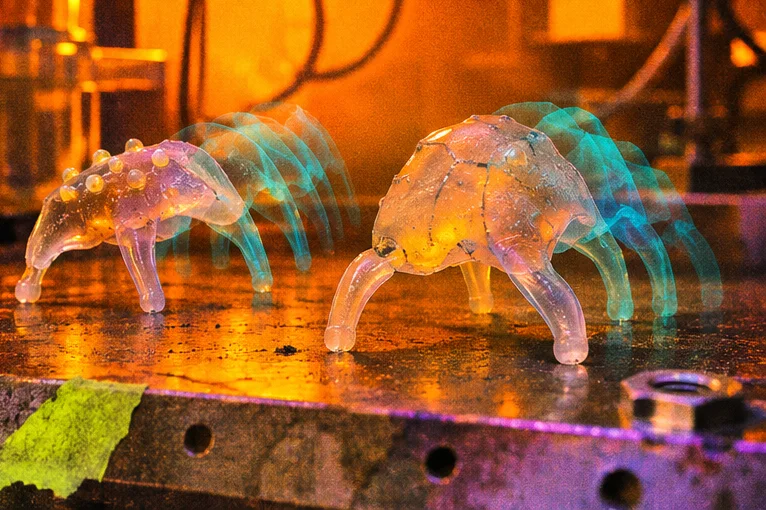
Bongard, Zykov and Lipson, Science (2006)
The repair shop opened after the last train. A woman in a green coat brought in a radio that played a single note between stations. Sometimes she could change its pitch by walking into the next room.
The technician took the back off and found a strip of folded copper where the speaker should have been. There was a printed date on an old capacitor. He checked it against the desk calendar. The date was tomorrow.
He asked what she wanted done. She said the note was coming from an empty lot where her aunt used to run an all-night canteen. She wanted to hear it once without the curtain of hiss. The technician connected a second radio and tuned it to the same point. In the quiet that followed, somebody lowered a kettle onto a hot plate.
The woman paid in small coins. She took the radio back out into the street and kept a hand on its case. At the crossing there was a delay before the light changed. She heard a chair dragged across concrete. Then she crossed.

END OF
TRANSMISSION.