RADIO SENSING · ISSUE 01 · PP. 25–28
A Room the Radio Can See
A wall can hide a person from a camera while leaving a pattern in the radio field.
AI-generated words and art ·
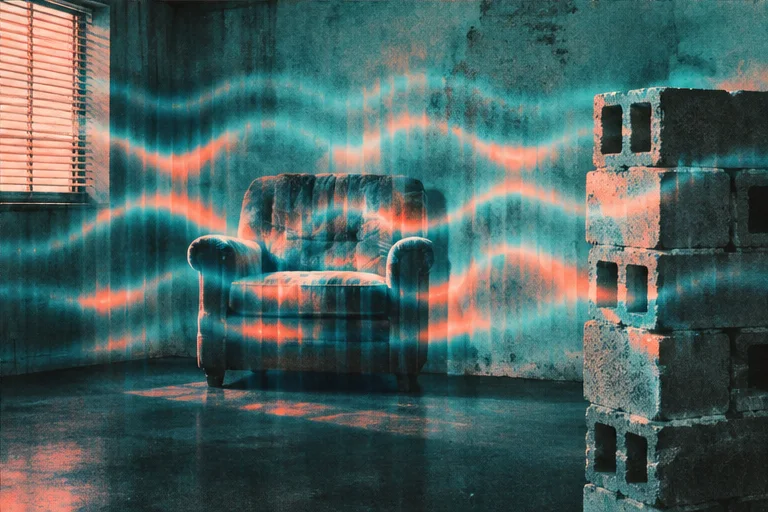
A room full of wireless signals has more paths than walls. Some energy travels directly from a transmitter to a receiver. More arrives by reflecting from surfaces. Put a person in the room and the collection of paths changes. Motion changes it over time. A camera gets an image arranged in pixels. A radio system gets a mixture of arriving signals.
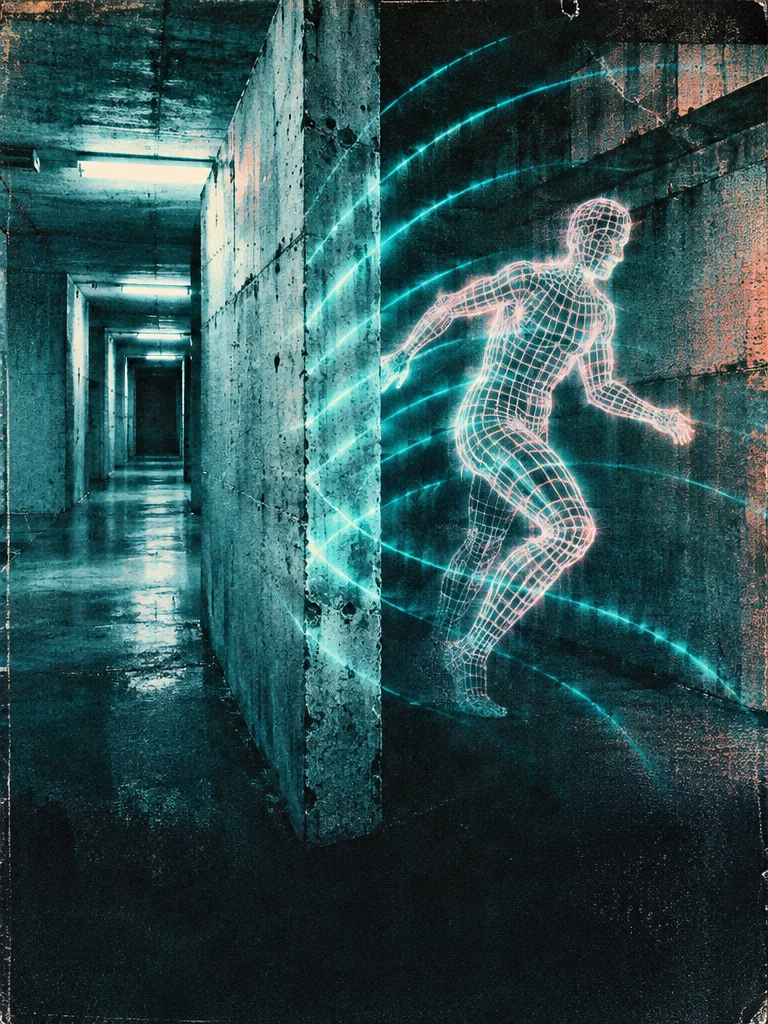
MIT CSAIL’s RF-Pose work, presented at CVPR in 2018, showed a way to infer two-dimensional body keypoints from a radio system in research settings, including through-wall demonstrations. The clever part was how it learned. During training, a camera-based system supplied pose labels at the same time the researchers recorded radio. The trained estimator then used the wireless observations by themselves.
Look at the skeleton in a demo and ask about the path from measurement to drawing. A confident line between shoulder and elbow is a model output. The receiver never measured a line. It measured a signal whose changes were associated with the poses in the training procedure.
The caption can overpromise
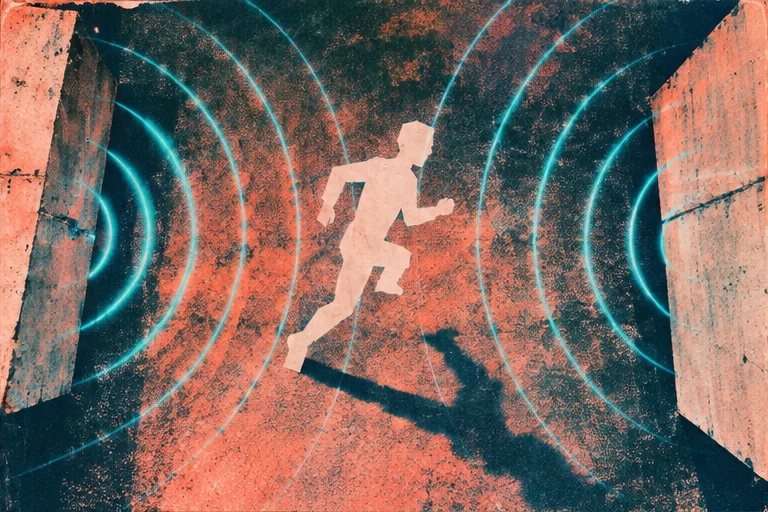
The 2023 DensePose From WiFi preprint explored a different target. Dense correspondence concerns points across a body surface, going beyond a sparse stick figure. The authors paired Wi-Fi channel measurements with the output of a vision model during training. The system was tested in a particular research setup. An ordinary networking signal becomes useful to the model because it carries information about how the channel changed.
This measurement is sensitive to placement and environment. Move the radios, add people or rearrange the room, and the mix of paths changes. Materials and signal bands matter too. An evaluation ought to separate three questions: whether someone is there, what a person is doing, and which body configuration best explains what the receiver picked up. Each asks for more from the signal.
A realistic demonstration shows quiet failures. A pose should disappear if there is too little evidence. If moving furniture confuses the system, that mistake belongs in the demo alongside the elegant clip of someone walking behind a wall.
A room with a privacy setting
NIST researchers discussing IEEE 802.11bf use cases describe sensing tasks such as detecting presence and monitoring building conditions. A hotel room that adjusts its lights when someone leaves is a straightforward pitch. Scale it to an entire floor and the same feature turns into a record of occupancy. The jump from a useful local decision to a searchable history is a design choice.
The people in the room may see a wall socket and a router. A useful notice would say which observation the building makes, whether it keeps the observations after the lights switch off, and who gets to consult the resulting record. Those choices are legible even to a reader who never learns what channel state information looks like.
The next time you see an extraordinary radio demo, look for an empty-room test and a room the system has never seen. Ask whether children, wheelchair users or a group close together were part of the evaluation. Each question turns a striking lab result into something you can judge as technology that will share a room with you.